Parma and the Merchant at the Fair
A journey through the wonders of the past
There's a place in Parma where time doesn't stand still, but rather blends in. It's the Mercante in Fiera, and if you've never been there, prepare to get lost, in the truest sense of the word.
Last weekend, I succumbed to the call of this festival that transforms the city into a kaleidoscope of memories, styles, and eras. I did so with my usual curiosity and that slightly childish desire to be amazed.
And I must say that the Merchant, this time, did not disappoint.
What's at the fair? Everything. Really everything.
Wandering among the stands is an experience I recommend to those seeking a unique piece, but also—and perhaps above all—to those who love to observe. Because among those stalls there's more than just restored furniture: there's a whole world.
I found myself browsing among unimaginable furnishings whose use I still don't understand today, colorful carpets that tell distant stories, wrought iron gates that must have adorned ancient Palladian villas, precious Murano glass and enormous chandeliers so imposing that you ask yourself: "In what modern home could I ever put this?"
And then paintings and statues of all kinds: stern-looking portraits of nobles next to slightly faded plaster Venuses, Art Nouveau busts, wooden Madonnas, and modern sculptures that you can't tell whether they're brilliant or simply strange.
And again: armchairs and living rooms so regal they seem to have welcomed kings and queens of the past. Entire living rooms covered in velvet, tufted sofas, and chaise lounges invite you to relax with a slightly old-fashioned charm.
Then, suddenly, the century changes. Brightly lit jukeboxes appear, with colorful bubbles and that enduring 1950s vibe. All around, signs of all kinds: classic gas station signs, and even the enormous, illuminated McDonald's sign—there, amidst the antiques, providing an ironic counterpoint to an era that already seems far away.
And then there's the jewelry section. Vintage pieces enclosed in velvet display cases: Art Deco brooches, yellow gold bracelets, natural pearl necklaces. And then the most precious stones: sapphires, rubies, emeralds, and diamonds that capture the eye and never let go. And finally, highly valuable watches: white gold pocket watches, vintage chronographs, vintage Rolexes, Patek Philippes. Each watch tells its own story, and you stop to think about how many hands wound them.
Vintage porcelain and clothing
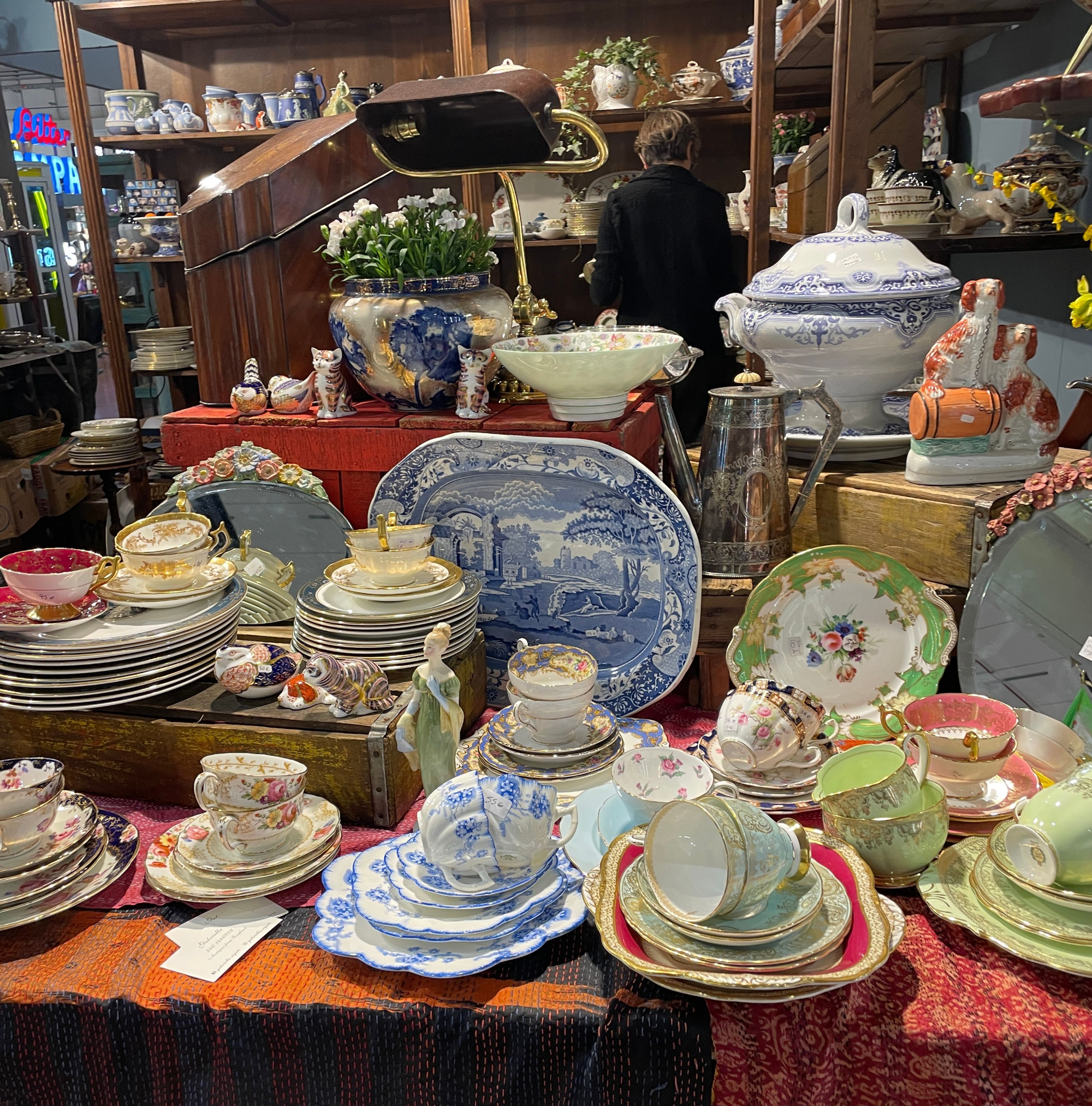
Then there's the porcelain. Hand-painted plates, exquisite cups, sinuous teapots. And then the dinnerware sets used on cruise ships of the past, when luxury was a privilege for the few. Plates with gold rims and monograms of legendary shipping companies—an elegance we struggle to even imagine today.
Finally, vintage clothing. Designer bags that have spanned decades: a bamboo Gucci reminiscent of the Dolce Vita, a Hermès that holds the stories of important women. And then frilly blouses with ruffles, lace, and mother-of-pearl buttons, seemingly straight out of an Audrey Hepburn movie. Alongside, silk evening dresses, cloche hats, and hand-printed scarves.
And so, after hours of walking…
Leave the Mercante at the Fiera with your eyes filled with images and your heart filled with joy. It doesn't matter if you haven't bought anything—even just looking, imagining, and touching is an experience worth the trip.
Because what makes this market special isn't just the chance to purchase a rare object, but to connect with stories that would otherwise be lost. Every chandelier, every armchair, every porcelain cup, every diamond, every designer bag, and every fru-fru blouse is a fragment of a world that no longer exists, but which here—for a weekend—comes back to life.
And we, curious and a little dreamy, have the privilege of being spectators.